
This week, I ran a test. I sent a message to one team I work with, and buried in it, I hinted at my current mental health and no one checked in on me. Why? Because my brand says I am the woman who gets things done. But behind every capable team member, there is a story. A human story that we leave at the door before we clock in for work.
For decades, the corporate world operated on a secret agreement. You are expected to show up, do the work, and keep your struggles at home. But you cannot separate who you are from how you lead. You carry your emotional patterns, fear responses, and anxieties into the workplace. And not acknowledging this costs companies.
According to the World Health Organisation, about 12 billion working days are lost every year to depression and anxiety. This drains one trillion dollars from the global economy every year. But there are real people with families behind those numbers. People who are exhausted, overwhelmed, and trying to hold it all together with the emotional equivalent of duct tape. These are staff members trying to care for families and who feel trapped by the need for a pay cheque.
Emotional intelligence in the workplace is not just a soft skill. The data tells a story. According to TalentSmartEQ’s research, 90 percent of top performers across industries score highly in emotional intelligence. Yet, social awareness, the ability to recognise, understand, and empathise with the emotions, needs, and perspectives of others, remains low. Social awareness would have been the skill my team would have used to say, “Kim does not quite sound like herself.”
In a team, we may practise emotional intelligence on ourselves, but are we really seeing others? And I see this when I train teams. I get them to do an uncomfortable exercise of sitting in front of each other for several minutes, without speaking, and just observing each other. I can feel my delegates squirming when we do this. But it produces some surprising results and they learn so much from it.
Before I started this work, I used to think that mental health support was an individual issue. I would have been the person who would just “Suck it up.” Perhaps that was because growing up, we never spoke about our emotions at the dinner table. When that thinking transfers into the workplace, it creates a culture that does not yet know how to deal with vulnerability. After all, it is productivity, and not passing the tissues, that pays the bills. Or is it?
When I wrote my book, Taming the Monster of Postpartum Depression, I explored how unresolved emotional pain can wrap itself around our identity. I learned we cannot simply soldier through our struggles. The same principle applies in our professional lives. When employees are struggling, they do not need pity or another standardised wellness survey. They need presence and they need to feel seen.
But you may be thinking. I know this, but how can one person make a difference?
In my book, I explained how I changed my mindset by practising a principle I call the one thing. I stopped trying to solve every problem at once and focused instead on taking one meaningful step forward. It sounds almost too simple, yet that single shift changed the way I approached challenges.
Over the years, I began noticing the same pattern in other people’s stories. Lasting change seldom starts with a grand plan. More often, it begins with one person taking one small action that grows into something much bigger.
That is exactly what happened to Peter Bostelmann.
In the late 2000s, Peter was a delivery executive at SAP in California when he turned to mindfulness meditation during a challenging period in his life. What began as his own way of managing stress soon became something larger. After experiencing the benefits himself, he approached Dr Natalie Lotzmann, SAP’s Global Vice President of HR, Chief Medical Officer and Global Head of Health and Well-Being, with an idea. Rather than dismissing it, she challenged him to think bigger. Could mindfulness be scaled across one of the world’s largest technology companies?
Peter chose the Search Inside Yourself (SIY) programme, developed by Google engineer Chade-Meng Tan together with neuroscientist Philippe Goldin and mindfulness teacher Marc Lesser. Designed to strengthen mindfulness, empathy, compassion and emotional intelligence, it became the foundation for a movement that would eventually reach thousands of SAP employees around the world.
Early in 2013, Peter organised a mindfulness event featuring some of the world’s leading practitioners. He hoped a handful of curious employees might attend. Instead, over 500 people showed up.
It was a clear sign that employees were looking for something more than another corporate training course. They were looking for practical ways to manage stress, think more clearly and reconnect with a sense of purpose at work.
Encouraged by the response, Peter recruited 25 managers and 25 employees to take part in two pilot programmes. The results convinced SAP that mindfulness had a place in business. In 2014, Peter was appointed director of the SAP Global Mindfulness Practice (GMP), with a mandate to build mindfulness programmes and support a global community of practitioners across the company.
Demand quickly outpaced SAP’s ability to deliver. By the end of the first year, around 1,500 employees were waiting for a place in the programme. Peter realised this was no longer something he could lead alone. He began recruiting and training facilitators to help expand its reach.
The first wave of trainer development began in 2015. Yet even as SAP increased its capacity, demand kept speeding up. By 2016, the waiting list had swelled to almost 9,000 employees. The challenge was no longer convincing people that emotional well-being mattered. It was finding enough trained facilitators to meet the appetite for a different way of working.
But SAP’s commitment to mental health was not just PR Hype. The company measures its results in its Business Health Culture Index (BHCI). They measure the degree to which their workplace culture supports people’s organisational health and well-being.
“Based on 2015 data, a change of one percentage point in the BHCI would have an impact of €75 million to €85 million on SAP’s operating profit.” …SAP: 2015 ANNUAL REPORT
Companies like SAP understand that resilience is not something we are born with. It is a muscle we build, and it requires the right environment to grow.
The World Health Organisation notes that for every US$1 invested in mental health treatment, there is a US$4 return in better health and productivity.
If you are an HR leader or a company policymaker, know that the shift can start with you. It means looking at the root causes of burnout and isolation within your teams. It means training your managers to have supportive conversations before a crisis hits.
But what if your company does not yet have a programme in place? What if you are an individual navigating your own emotional challenges? Peter Bostelmann started with his own form of self-compassion.
This story tells us that there are others who have walked a similar journey to yours. You do not have to carry the weight alone. Whether you reach out to a manager, a crisis line, a social network, or an employee wellness programme, asking for help is the bravest thing you can do.
Tomorrow morning, someone on your team will ask, “How are you?”
Decide now whether you’re prepared to hear the standard response or the real one. You may discover the truth that you are not really alone.
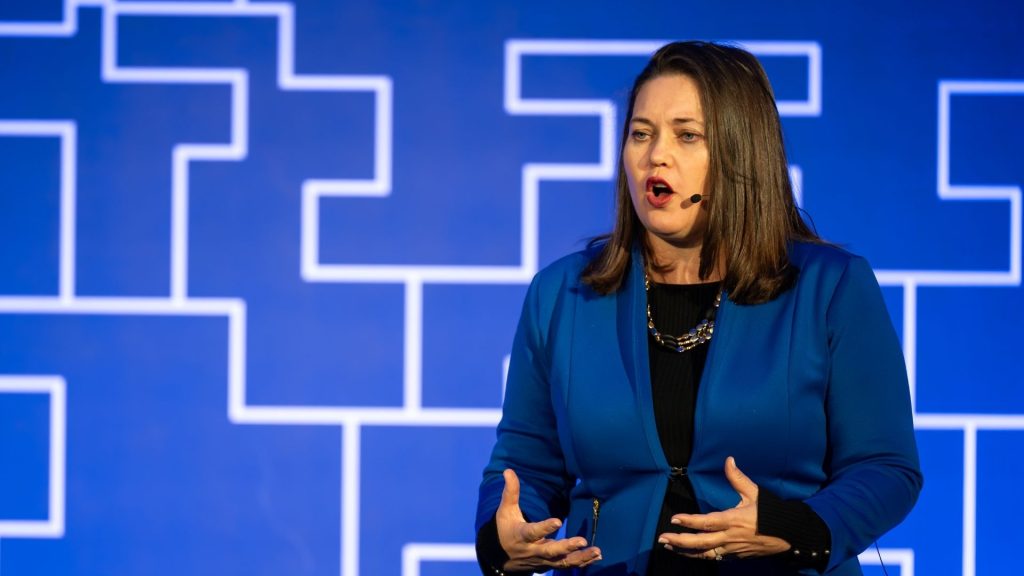
Kim Vermaak has built her career on the knowledge that most people are far more capable than the story they are currently telling about themselves.
As an emotional intelligence trainer, TEDx speaker, book coach, and author of nine published works, she works with corporate leaders and thought leaders ready to close the gap between who they are in private and who they show up as in public. Through her journal, How You Show Up, she builds the self-awareness that helps professionals reframe their thinking, and her book coaching practice helps leaders find the structure, the voice, and the courage to put their knowledge into the world.
She is also a storyteller in the fullest sense. Her evolving medieval fantasy series, comprising four novels, several novellas, and a growing collection of short stories, draws on themes of identity, resilience, and the long road back to self. Her author development guides, including Escaping the Well of Silence, and writer’s retreats support writers at every stage of their journey.
And then there is the book she had to write.
In 2003, the year after her first daughter was born, Kim was named the BWA Nedbank Regional Start-Up Business of the Year. She was building a company, navigating single parenthood, and keeping the reality of postpartum depression entirely to herself. More than two decades later, she published Taming the Monster of Postpartum Depression, a work that merges lived experience with neuroscience and real family stories, and challenges the corporate world to take parental mental health seriously. That gap between public achievements and private struggles is precisely what the book is about.
A PechaKucha and TEDx speaker, Kim has shared her insights across radio, HR forums, and corporate wellness platforms. She serves as President of the Johannesburg chapter of PSASA and is a finalist in the 2026 Woman of Stature Awards in the Coaching and Mentorship category.
Her sessions are honest, grounded, and insight-led, the kind that stay with a room long after the applause has faded.
She is available for keynotes, workshops, panel discussions, and corporate wellness programmes.
For bookings and enquiries:

