You know that moment when something happens at work and your whole body reacts before your mind has even caught up?
It feels like a tightness in your chest or a rush of frustration. That sense of being hurt, overlooked, or even betrayed.
This is what people often hide when I first step into a training room. Their managers are sending them to emotional intelligence training or other soft skills. But emotional intelligence is not a “them vs us” training session… although it often feels that way at the start.
The actual skill starts with noticing your triggers. It is not about fixing other people or controlling outcomes. Rather, it is about learning to sit with your own emotional reactions and choosing what to do next.
This does not come naturally.
Our brains are wired for survival, not for thoughtful leadership. When a colleague, customer or team leader makes us mad, our brains move into protection mode. We fight, run or we freeze and hope it passes. Some people call it fight, flight, or fawn. None of these responses helps in high-stakes work situations. None of them helps to build our team, our families or ourselves.
I learned this the hard way in my very first management role. You may recognise part of this story in your workplace.
I spoke about this experience in one of my previous articles on book writing. I focused on the story itself and how we translate lived experiences onto the page. But today, I want to take you back into that same moment and unpack it from an emotional intelligence perspective.
Because there is a deeper level that many of us miss.
My first jobs were in sales, marketing, and as a personnel agent. I was good at what I did. I was organised, driven and reliable. That is why when I took a job at an office furniture company, my boss promoted me to marketing manager.
But no one had ever taught me how to lead people.
Part of my role was managing our hospitality staff and receptionists in a beautiful showroom in a building designed in the Art déco style popular in the 1920s to 1930s. It was one of those spaces that made you feel elegant just by walking into it. It had a sweeping carpeted staircase with a polished wooden banister, original decorative motifs in the bathroom and a warm, welcoming energy. It was a place where clients felt inspired and connected. We called it the White House.
My direct boss, who was the CEO, was articulate, kind, respectful and hardworking. He was a powerful leader and was more of a mentor than a boss. But it would take years for me to realise just how to use some of those qualities myself.
Then everything changed. There was a merger. It brought in new staff who had a completely different culture. There were exit interviews, politics and a lot of disruption. Our showroom could not contain all the staff. The directors moved the bulk of the staff to a larger factory in Aeroton.
The showroom was a 15-minute drive from the factory on a good day. But a 15-minute drive never really equals the drive. It is packing up, breaking your day and moving between two points. It may not sound like much, but it created a real emotional and physical separation. A separation that many of the staff were reluctant to overcome and so they only travelled when they had clients to see.
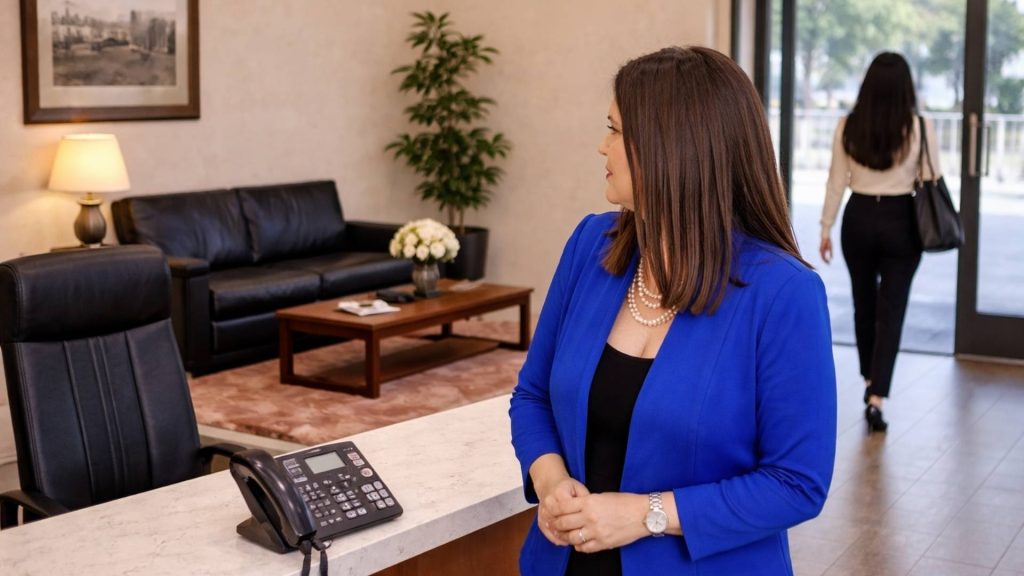
I had to split our reception team. Our switchboard operator moved to the factory and the front-line receptionist stayed behind at the White House. These two women made a great team and there were regular smiles and laughter at the front desk. But now that was a thing of the past.
We left a sales manager, an internal sales consultant, a hospitality team member, and the gardener at the showroom as the only companions for our front-line receptionist.
I expected things to carry on as normal.
That was my first mistake.
One day, I received a call from the sales manager. My receptionist had packed up, said she was going to lunch, and never came back.
There was no message and no explanation. She was just gone.
I realised I felt angry, disrespected and embarrassed. That betrayal felt like a physical blow and my body trembled as it started releasing cortisol and adrenaline into my bloodstream.
These stress hormones push you into survival mode and then you stop thinking about the other person. I told myself a story that she had been unprofessional. That she had let me down and she had failed us.
Those words came quickly. I was reacting from that fear response. But then, as I had to sit with it, I told myself that the split was not my fault. While that was true, my response… the way I had handled things, that was my responsibility. And just as I had to learn marketing techniques as a student, now I had to learn emotional intelligence. Just like you and your managers have to learn it.
And this is the exercise I want you to try.
Pause and do a self-check.
What are you really feeling?
Don’t give the professional, politically correct answer you would expect management to approve of. Dig deep for the honest one.
I realised I felt betrayed. I had trusted her and I was the one who had hired her. There was also a deep sense of shame. What did this say about me as a manager?
What I have learned is that you can’t think clearly when you still have those stress hormones circulating in your body. Learn some grounding techniques that will help regulate your breathing and thinking. This is part of what I teach in my workshops.
So the next question is:
What am I assuming?
I assumed she did not care. I assumed she was careless and assumed her actions were about me.
Was there truth in that? If there were, what else could be true?
Those questions were my first step towards emotional intelligence. But I had to dig deeper.
What if she were overwhelmed? What if she felt isolated after the split? What if we had moved her into a situation where she no longer felt supported, seen, or valued?
What if we had failed her?
A high-performing person does not simply walk away without a reason. Somewhere along the line, something shifted. And we did not notice.
That was the moment I understood that emotional intelligence is not about controlling others. It is about growing yourself so that you can be a better team player.
It was not about being right. It was about being curious. I had to become curious about what was happening in her life. You see, I assumed everyone was like me. That thinking implied that when people thought or reacted differently to me, they were wrong. But different is not wrong.
I had to stop reacting and start thinking.
It is about asking yourself:
What really matters here? What is the impact of my reaction? How could I show up differently? What might this person be experiencing that I cannot see?
And perhaps most importantly:
How could I have created a space where she felt safe enough to speak before she left?
I did not handle that situation well. I reacted from emotion, not from awareness. But it taught me something powerful.
You can learn and you can grow.
I often hear the cliché, “A leopard cannot change its spots”. I do not believe that. I think it is a comforting excuse that keeps us stuck in patterns that don’t serve us.
Because if we accept that we cannot change, then we do not have to do the uncomfortable work of reflection.
That work can trigger you and bring up guilt, regret, even sadness. But it is also where growth lives.
So, the next time you feel triggered, I want you to slow that moment down.
Notice what you are feeling. Name the emotion and sit with it for a while.
Then ask yourself what else could be true. You might be surprised by what you discover.
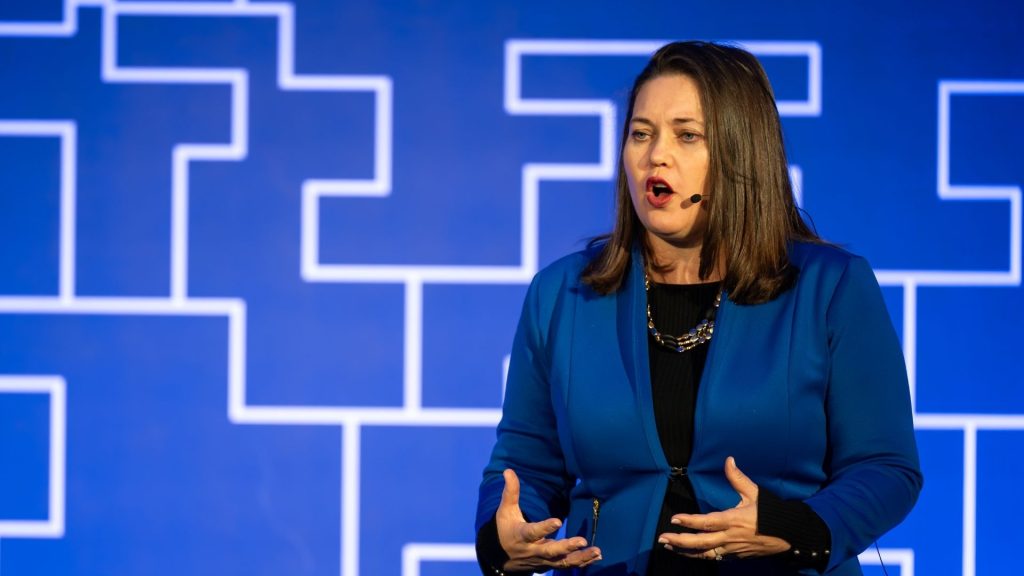
Kim Vermaak is an author, book coach, and speaker who helps leaders and aspiring authors unlock their stories while navigating the emotional challenges that can block creativity and growth. Drawing on years of experience guiding writers through the complexities of publishing, she understands that the same patterns that hold people back in their writing often show up in the workplace, affecting communication, collaboration, and leadership.
Kim’s coaching goes beyond mechanics. She helps authors process the emotional baggage that can prevent them from finishing their books, turning personal insights into compelling stories that resonate. As a speaker and trainer in emotional intelligence, she shows organizations how storytelling can illuminate human behavior, strengthen workplace connections, and inspire authentic leadership. Her work bridges the worlds of writing, publishing, and professional development, empowering both individuals and teams to express themselves clearly, lead with empathy, and create impact through story.

